
Traffic signs and intersections: A practical guide for safe driving in 2026
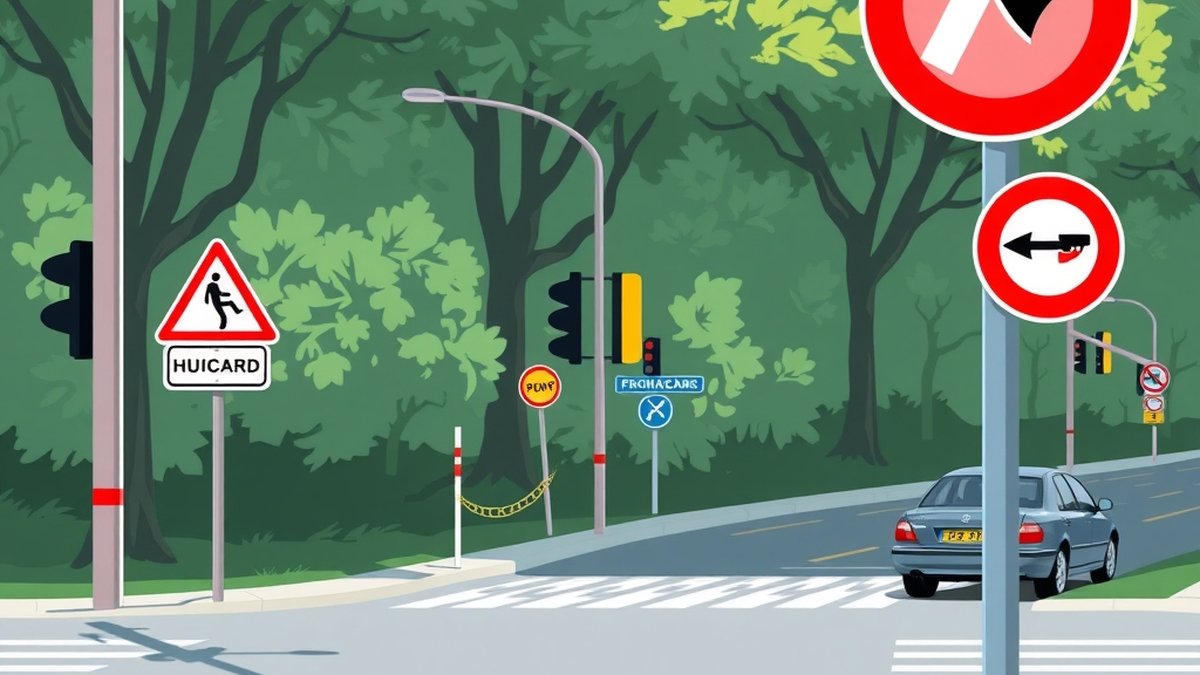
Strategies for memorizing traffic signs effectively
One of the biggest challenges in preparing for a driving test is fully memorizing traffic signs. With new and modern signs being added to our roads in 2026, it is important to study them by grouping them. To remember each sign, pay attention to its shape and color.
- Prohibitory signs: Usually in the shape of a circle with a red border. They remind you of what is not allowed.
- Warning signs: Triangular in shape, with a red border and a yellow background, indicating that a dangerous area is approaching.
- Mandatory signs: Blue circles that indicate the direction of mandatory movement.
The most effective way to remember signs is to compare them with the visual cards on the traffic-signs page. Spend 15 minutes every day analyzing 5 randomly selected signs and imagine how you would apply their meaning in practice.
The golden rules of crossing intersections
Intersections are the busiest and most dangerous part of traffic. According to the 2026 traffic rules, distinguishing between main and secondary roads is the key to success. If you are at an unregulated intersection, always give priority to vehicles coming on the main road.
Follow this sequence when crossing an intersection:
- Observe the signs: Make a decision based on the main road sign or traffic light signal.
- Determine the direction: Occupy the appropriate lane in advance when turning right, left, or moving straight.
- Pedestrian safety: Always yield to pedestrians crossing the intersection, even if they are violating the rules.
If the traffic light is not working at the intersection or there is no traffic controller, refer to the traffic-rules section to review priority rights.
Privileges and right of way
Knowing who should go first on the road is necessary not only for the exam but also for real-life safety. In 2026, special vehicles (ambulances, fire trucks) always have priority. In other cases, the rule is simple: yield to the vehicle approaching from the right.
Table of situations where priority is given at an intersection:
| Situation | Who has priority? |
|---|---|
| Intersection of equal importance | The driver on the right |
| Main and secondary road | The driver on the main road |
| Intersection with traffic lights | The side with the green light |
It is recommended to reinforce these rules in practice using the exam-simulator. Various situations in the simulator will help you avoid mistakes in real life.
Managing stress and staying focused
Many drivers, even if they have knowledge, fail to notice signs or road markings during the exam due to nervousness. Follow these tips to keep calm during the 2026 examination process:
- Preparation: Work through all questions multiple times using driving-test-tickets.
- External factors: Get a full night's sleep before the exam day. A tired brain cannot make quick decisions.
- Visualization: Imagine yourself driving through an intersection and explain each of your actions internally.
Remember that the exam tests not only your knowledge of rules but also your ability to assess the situation correctly. If a question is unclear, read it again without rushing.
Methods for safe maneuvering at modern intersections
In 2026, crossing an intersection requires not only knowing the rules but also correctly assessing the local situation. Many drivers create dangerous situations because they do not reduce speed before entering an intersection. The most important rule is to observe vehicles from all directions before entering the intersection and fully comply with the 'right-hand' rule.
Pay attention to the following practical steps when maneuvering:
- Plan ahead: If you intend to turn, occupy the appropriate lane at least 50-100 meters before and turn on your turn signal.
- Blind spots: Along with trusting your mirrors, develop the habit of turning your head to check the 'blind spot' on the side before turning.
- Keep distance: Keep a distance of at least 2 seconds, considering that the vehicle in front may stop suddenly.
Remember: Excessive rushing at an intersection often leads to minor collisions. If you are hesitant while driving, wait for all vehicles to come to a full stop.
Risks of misinterpreting traffic signs
In the 2026 traffic rules, the meanings of some signs are very similar, and drivers may confuse them. For example, understanding the difference between 'No Stopping' and 'No Parking' signs helps to avoid fines. One of the most common mistakes is treating temporary road signs on the same level as permanent signs.
List of common mistakes:
- Indifference to temporary signs: Forgetting that signs on a yellow background in road repair areas take precedence over permanent signs.
- Obstacles hiding signs: Missing signs hidden by tree branches or advertising banners and violating mandatory traffic directions.
- Ignoring additional plates: Not reading additional information signs below the main sign (e.g., 'weekends only').
To avoid such mistakes, always pay attention not only to the signs on the side of the road but also to the horizontal lines on the road surface. They often complement the signs and clearly show the lane of movement.
Practical comparison: Traffic light vs. Traffic controller
In many cases, drivers have difficulty understanding the signals of a traffic controller. According to 2026 standards, if there is both a traffic light and a traffic controller at an intersection, the traffic controller's signals have absolute priority. The following table clearly shows this hierarchy.
| Type of movement | Priority level | Note |
|---|---|---|
| Traffic controller | Highest | Traffic light is considered inactive |
| Temporary signs | High | Superior to permanent signs |
| Traffic light | Medium | Active while functioning |
| Road signs | Low | At an unregulated intersection |
Traffic lights may sometimes turn off due to technical malfunctions or operate in 'flashing yellow' mode. In such a situation, the intersection is considered 'unregulated,' and you must follow the main road signs or the 'yield to the right' rule. Always observe the intentions of other drivers around you, as not everyone interprets the rules correctly.
Frequently asked questions
Is it possible to drive on a yellow traffic light?
No, according to the 2026 rules, a yellow light prohibits movement. It is allowed to pass only for safety reasons if the driver cannot stop without hard braking.
How to identify a main road?
The main road is usually marked with appropriate traffic signs (e.g., the diamond-shaped 'Main Road' sign). If there are no signs, a paved road is considered primary compared to an unpaved road.
Which lane should you enter when turning right at an intersection?
When turning right, you should always enter the rightmost lane unless road signs or markings indicate otherwise.


Hozirça izoh yöq.